
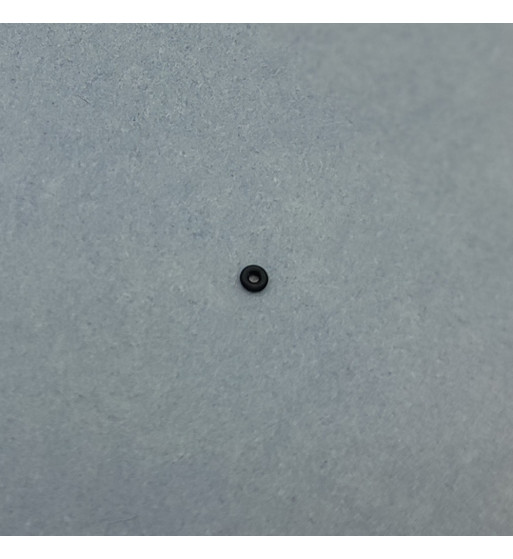
O-ring crown gasket for watches. Reliable seal against water, dust and humidity.
A professional-grade watch crown gasket developed for amateur watchmakers and serious restoration enthusiasts. Fitted around the winding stem, it seals the crown opening and prevents moisture, dust and sweat from entering the case through one of the most exposed areas of any timepiece.
The crown gasket is a small but critical O-ring located inside the crown or around the winding stem of your watch. It works as a dynamic seal: every time you wind, set the time or set the date, the stem rotates and slides through this gasket. A worn crown seal is one of the most common causes of water ingress on dress and entry-level diving watches. Replacing it during every service is therefore considered standard practice in professional watchmaking.
Fit a new crown gasket on every battery change, every full service, after a fall on the crown side, or as soon as the crown feels rough or sticky to operate. Dress watches, daily-worn quartz models and entry-level diving watches all benefit from this preventive replacement. Because the crown is the most frequently manipulated part of a watch, its gasket wears faster than the case-back gasket and must be checked more often.
Shipped from our French workshop, each crown gasket is dimensionally inspected and batch tested for elasticity. The materials we source comply with professional watchmaking standards and provide consistent performance over years of daily use.
The crown gasket is a dynamic seal that rotates with the stem, whereas the case-back gasket is static. Crown gaskets are usually smaller and wear out more quickly.
Yes for most non-diving watches. Silicone tolerates temperature better, while NBR is more abrasion resistant. Match the original material whenever possible.
Absolutely. A thin layer of silicone grease is essential for crown gaskets because the seal works under constant friction with the rotating stem.
For complete watertightness we recommend renewing the case-back gasket, the crown gasket and, where applicable, the crystal gasket during the same service. A consistent set of fresh seals delivers a far better water-resistance result than replacing a single component. Our online catalogue lets you cross-reference inner diameter, outer diameter and cross-section to find the exact match for your watch, whether it is a Swiss-made automatic, a Japanese diver or an entry-level quartz.
Keep your spare gaskets in a cool, dry drawer, away from sunlight, ozone-emitting devices and aggressive solvents. Stored under these conditions, an NBR or silicone O-ring retains its mechanical properties for several years. Inspect each gasket before fitting: it must be perfectly circular, free of cuts and free of permanent set. Discard any seal that shows signs of crystallisation or tackiness on the surface.
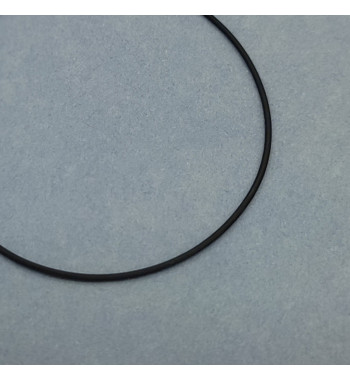
Affordable watch repair gasket 0.60 mm. Reliable seal against water, dust and humidity.
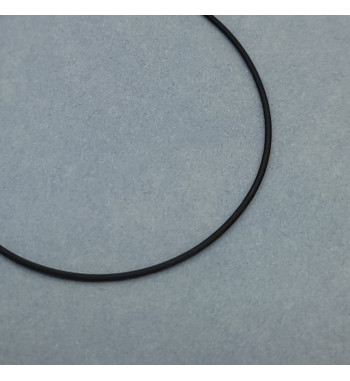
Rubber O-ring watch gasket 1.00 mm. Used by watchmakers for professional servicing.
O-ring crown gasket for watches. Reliable seal against water, dust and humidity.